

Signs Trust Is Growing in Your Relationship
Disclosure: Some of the links in this post are affiliate links. This means if you click on the link and purchase an item, I will receive an affiliate commission at no extra cost to you.
One of the biggest mistakes people make is treating trust like an emotion.
It isn’t.
Rather, it is a conclusion.
It’s the conclusion you arrive at after watching someone long enough to know who they really are.
That’s why I never tell people to trust someone because they have a kind smile, a comforting presence, or the right words.
I’ve met people who could make anyone feel special within an hour.
They knew exactly what to say to sound genuine. Always appearing emotionally available.
Yet none of those qualities were enough to prove they are trustworthy.
Character is what earns trust.
It takes time to reveal itself because it doesn’t live in promises. It lives in patterns.
That became one of the greatest lessons from my years in a long-distance relationship.
Distance has a way of removing the shortcuts people often rely on.
You can’t build a relationship on chemistry alone when hundreds of miles separate you.
Sooner or later, your confidence in each other begins to rest on something much deeper.
It rests on who your partner consistently proves themselves to be.
When people ask me how I knew trust was growing between us, my answer surprises them.
I didn’t wake up one morning feeling completely secure.
There wasn’t a conversation that erased every doubt.
I just found myself reaching a place where my partner’s words no longer needed constant verification.
When he said he would call, I expected to hear from him.
He never disappeared without explanation.
When something changed, he told me instead of leaving me to imagine the worst.
Over time, I stopped believing him because I wanted to.
I believed him because his character had given me every reason to.
That’s an important difference.
Trust doesn’t grow because someone asks for it.
It grows because someone repeatedly behaves in ways that deserve it.
People sometimes worry that trusting their partner makes them naïve.
I don’t see it that way. Blind trust ignores evidence.
Healthy trust is built on evidence. It comes from paying attention.
You notice how they respond when life becomes stressful.
How they handle disappointment.
You watch what they do after making a mistake.
Your motivation remains to see if their actions keep matching their words.
By the end of this article, I hope you’ll recognize the signs trust is growing in your relationship and also, how to build it if it’s missing.
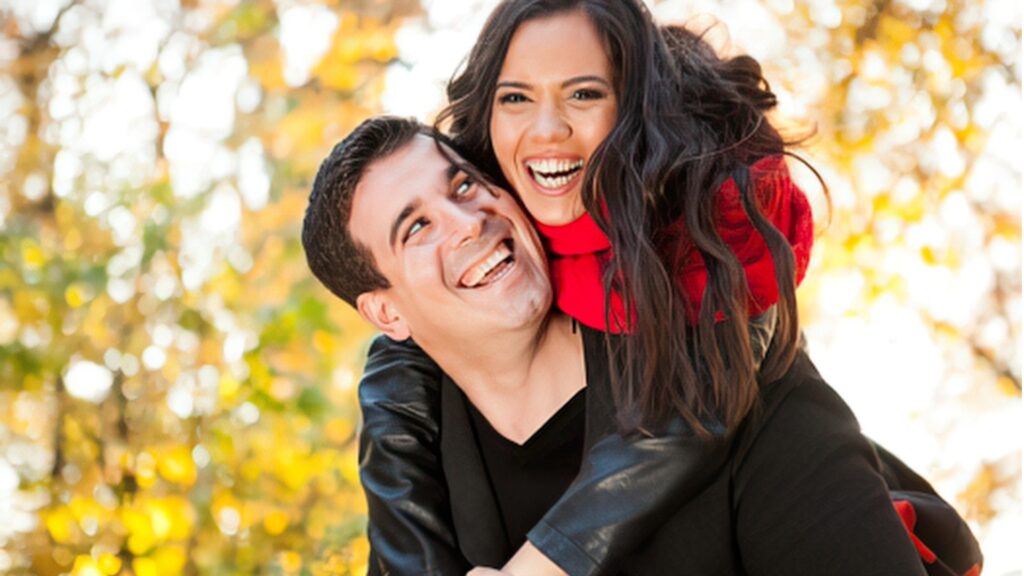
Trust Grows From Character, Not Feeling
A misconception about relationships is that trust and attraction are the same thing.
They aren’t. Attraction can happen in a single conversation.
Trust cannot. Attraction may draw you toward someone, but trust is what convinces you it’s safe to stay.
I’ve seen people mistake excitement for security more times than I can count.
They meet someone who remembers every little detail, sends thoughtful messages, and makes them feel like the only person in the room.
It’s a beautiful feeling, and there’s nothing wrong with enjoying it.
Still, feelings are only the beginning of a relationship.
They cannot tell you how someone will respond when life becomes demanding.
Or if that person values honesty more than convenience or commitment more than comfort.
That’s why I always encourage couples to pay attention to character before they surrender their trust.

Trust Is Proven in Everyday Moments
Character doesn’t reveal itself during your best conversations.
It reveals itself when plans change.
It becomes visible when someone has the opportunity to disappoint you but chooses integrity instead.
Those moments aren’t always loud.
Most of them pass quietly. Yet they tell you far more about a person than a hundred sweet messages ever could.
Long-distance relationships make this lesson even clearer.
When you don’t share the same city, you can’t rely on physical closeness to reassure you.
You can’t drop by after work or read your partner’s body language every evening.
Much of your relationship depends on believing the person you cannot see.
That sounds frightening at first, yet it also becomes one of the greatest strengths of long-distance love.
It teaches you to value consistency over charisma and reliability over romance.

One of the First Signs Is That You Stop Looking for Hidden Meanings
There was a season in my relationship when I read too much meaning into almost everything.
If his reply was shorter than usual, I wondered if he was upset.
When he sounded tired during a call, I questioned if something had changed between us.
If our conversation ended earlier than I expected, I spent the rest of the evening replaying it in my mind, trying to figure out what I had missed.
Looking back now, I wasn’t responding to his actions. I was responding to my own uncertainty.
Distance can do that to you.
When you don’t have the comfort of seeing your partner every day, your imagination sometimes tries to fill the spaces that reality leaves behind.
Sadly, imagination doesn’t always tell kind stories. It usually chooses the story that scares you the most.

You Believe Their Words Because Their Actions Have Backed Them Up
One of the most comforting moments in any relationship comes when your partner says something, and your first instinct is to believe them.
Not because you’re ignoring red flags.
Neither is it because you’ve decided to trust blindly.
You believe them because they’ve spent enough time proving that their words mean something.
That kind of trust isn’t handed over at the beginning of a relationship.
It develops after some time.
It grows each time your partner follows through on a commitment, admits a mistake without making excuses, or tells you the truth even when the truth is uncomfortable.
I think that’s an important distinction.
Anyone can make promises when love feels exciting.
Almost everyone knows what to say during the early stages of a relationship.
The real question is what happens after the excitement settles down.
Do they still show up?

Their Consistency Becomes More Convincing Than Their Promises
I remember planning a movie night date with him one weekend.
We both looked forward to the weekend.
But that faithful Friday evening, which was supposed to be the first day, he sent me a message explaining that something unexpected had happened at work.
He apologized and asked if we could move our date to the following evening.
Of course, I felt disappointed.
I had been looking forward to spending that time together.
Still, I wasn’t suspicious.
That surprised me because I knew an earlier version of myself would have spent the rest of the evening wondering if something else was going on.
Instead, I simply told him I understood.
The reason had nothing to do with that single message.
It had everything to do with the months that came before it.
He had never given me a reason to question his honesty.
Whenever he couldn’t keep a commitment, he acknowledged it instead of pretending nothing had happened.
He respected my feelings enough to keep me informed instead of leaving me to guess.
That’s when I understood that trust doesn’t depend on someone being available every minute of every day.
It depends on knowing that when circumstances change, your partner won’t leave you alone with unanswered questions.
There’s a quiet confidence that comes from knowing someone’s “I’ll call you tomorrow” isn’t just a nice sentence.
It’s a commitment they genuinely intend to keep.
When you reach that point, you stop searching for proof behind every conversation.

You Feel Safe Enough to Be Completely Honest
There is a kind of honesty that only grows where trust already exists.
I’m not talking about telling your partner what they want to hear.
What i mean is telling them what feels difficult to say.
You admit when something has been bothering you instead of pretending you’re fine.
You tell them when you’re feeling insecure instead of hiding behind silence.
And you share your fears without worrying they’ll use those fears against you later.
That’s a very different kind of relationship.
Many people stay quiet because they’re afraid honesty will create conflict.
They convince themselves it’s easier to keep certain thoughts to themselves than to risk an uncomfortable conversation.
For a while, I did the same.
I thought protecting the relationship meant protecting it from difficult conversations.
But that is a subtle way of digging an early grave for your relationship because definitely, any relationship built that way would die.

Honest Conversations Stop Feeling Like Dangerous Conversations
One evening, I finally told my partner something I had been carrying for weeks.
I explained that I had started feeling disconnected.
Nothing dramatic had happened between us.
Life had simply become so busy that our conversations felt rushed.
I missed the way we used to talk without watching the clock.
Looking back, I remember feeling nervous before bringing it up.
Part of me expected him to become defensive.
Another part worried he would think I was asking for too much.
Instead, he listened, didn’t even try to interrupt nor make me feel guilty.
That conversation changed something inside me.
Not because every problem disappeared.
It changed because I learned I didn’t have to hide parts of myself to keep the relationship peaceful.
That’s one of the clearest signs trust is growing in your relationship.
You stop seeing honesty as a threat but as one of the ways the relationship becomes stronger.
When both people feel safe enough to speak openly, small concerns don’t have the chance to become deep resentments.
They are dealt with while they are still small.
I’ve always believed that’s one of the greatest gifts trust gives a relationship.
It doesn’t promise that you’ll never disagree.
It gives both of you the confidence to believe that even difficult conversations can bring you closer instead of pulling you apart.

You Stop Feeling Like You Have to Earn Their Love Every Day
One of the hardest parts of an unhealthy relationship is the feeling that you have to keep proving your worth.
You feel as though one mistake could change everything.
A missed call makes you nervous.
Even an ordinary disagreement leaves you wondering if they’re pulling away.
Living that way is exhausting.
Love begins to feel like something you must constantly protect instead of something you can peacefully enjoy.
I know that feeling because I experienced it early in my relationship.
There were times I questioned myself after almost every conversation.
I wondered if I had talked too much.
Replayed my words, searching for something I shouldn’t have said.
If my partner seemed distracted, I immediately assumed I had done something wrong.
Looking back, I wasn’t doubting him as much as I was doubting my place in his life.

Peace Replaces the Need for Constant Confirmation
I remember a time when my partner told me he would be spending the afternoon with a few close friends.
Months earlier, that kind of plan would have made me uneasy.
I probably would have checked my phone far too often.
I might have wondered why he hadn’t replied yet or started imagining conversations that never happened.
Instead, I went about my own day.
I finished some work, visited a friend, and only smiled when I saw his message later that evening.
It wasn’t because I had stopped caring.
It was because I had stopped needing constant confirmation that everything was okay.
His life didn’t feel like a threat to our relationship.
It simply felt like part of the life he was building while loving me from a distance.
That was a beautiful realization.
Healthy relationships leave room for two people to have full lives without making either person feel forgotten.
When trust grows, you stop measuring love by how quickly someone replies or how often they update you.
You already know they will tell you what matters.
You already know they won’t leave you guessing when something important changes.
That’s a much calmer way to love someone.
It’s also one of the clearest signs that trust has matured.
Your peace no longer depends on knowing where your partner is every minute of the day.
It rests on knowing who they have consistently shown themselves to be.

You Notice That Apologies Lead to Change
Every couple hurts each other from time to time.
It may not happen on purpose. Sometimes it’s a forgotten promise or a careless comment.
Making mistakes doesn’t mean a relationship lacks trust.
What matters is what happens after those mistakes.
I’ve always believed an apology is only the beginning of rebuilding trust.
The real question comes afterward.
Does anything actually change?

Their Effort Matters More Than Their Excuse
I remember a season when my partner had developed the habit of replying much later than usual.
He wasn’t ignoring me.
Life had become unusually busy, and I understood that.
Still, there were evenings when I found myself waiting much longer than I expected without knowing what was happening.
One night, I finally told him how it made me feel.
I simply wanted him to understand that silence can feel much longer in a long-distance relationship than people realize.
He listened carefully.
He apologized without trying to defend himself.
Then he said something that stayed with me.
He told me he didn’t want me carrying unnecessary worry because of something he could easily improve.
Over the next few weeks, I noticed a change. If work was running late, he’d send a quick message.
If he knew he’d be unavailable for a while, he’d let me know beforehand.
The messages weren’t long.
Sometimes they were only a sentence or two. Yet they told me something far more important.
He hadn’t apologized just to end an uncomfortable conversation.
Rather, he cared enough to make a genuine adjustment.
That meant more to me than the apology itself.
Words can comfort you for a moment. Changed behavior comforts you for much longer.
To me, that’s one of the strongest signs trust is growing in your relationship.
Your partner doesn’t see your concerns as complaints to dismiss.
They see them as opportunities to love you better.
And when both people respond that way, trust doesn’t stay where it is.
It deepens.
Not because either of you has become perfect, but because you’ve both shown that the relationship matters enough to grow from your mistakes together.

You Find It Easier to Give Each Other the Benefit of the Doubt
Every healthy relationship reaches moments that could easily become misunderstandings.
A joke doesn’t land the way it was intended.
Someone forgets to mention something that later seems important.
Those moments happen to every couple.
The difference is how each couple responds to them.
When trust is still developing, it’s easy to assume the worst before hearing the full story.
A simple misunderstanding suddenly feels like proof that something is changing. You react before you understand.
You defend yourself before anyone has accused you of anything. I’ve learned that those reactions usually come from fear, not from facts.

You Start Believing There Is an Explanation, Not an Excuse
I remember one evening when my partner forgot to tell me about a family gathering that had taken up most of his day.
When we finally spoke, I felt disappointed. Not because he had spent time with his family.
I was disappointed because I had expected to hear from him much earlier. Years ago, I would have allowed that disappointment to become suspicion.
I would have started asking questions he wasn’t even expecting.
Instead, I simply listened.
He explained what had happened, apologized for not letting me know sooner, and admitted he should have sent a quick message before things became busy.
The conversation ended almost as quickly as it began. There was no argument.
No silent treatment nor emotional distance.
What made the difference wasn’t his explanation that day.
It was everything I already knew about him.
I knew he wasn’t someone who ignored me on purpose.
He respected our relationship.
I knew that one forgotten message didn’t erase months of thoughtful communication.
That’s what trust does.
It reminds you that people can make mistakes without becoming different people.
When you truly know someone’s character, you don’t rush to place the worst possible meaning on every imperfect moment.
You give them the opportunity to explain before you decide how you feel.
To me, that’s one of the most reassuring signs trust is growing in your relationship. Your first response becomes understanding instead of accusation.
You still hold each other accountable and still talk about what hurt.
At the same time, you choose to believe that the person you love deserves to be heard before they’re judged.

A Relationship Built on Trust Changes You Both
When people talk about trust, they often focus on what it helps you believe about your partner.
As important as that is, I think trust changes something else first.
It changes you.
You stop carrying your relationship with tense hands, afraid that one unexpected moment will make everything fall apart.
You stop treating every delay like a warning and every disagreement like the beginning of the end.
Instead, you find yourself enjoying the relationship more because your heart no longer spends every day searching for reasons to worry.
Looking back, that’s one of the greatest gifts my own long-distance relationship gave me.
The distance didn’t disappear overnight, yet the fear slowly did.
That happened because trust had quietly taken its place.
It’s the same kind of steady confidence many couples build after learning how to avoid the common habits that slowly damage long-distance relationships.
If there’s one thing I hope you take away from this article, it’s this: trust isn’t something you chase.
It’s something two people create together.
Every honest conversation, every kept promise, every difficult moment handled with care becomes another brick in a foundation that grows stronger with time.
That’s why healthy relationships don’t depend on perfect people. T
hey depend on people who choose integrity, honesty, and consistency even when life feels complicated.
Those choices may seem ordinary in the moment, yet they become the very reasons a relationship survives seasons that once felt impossible.
So, if you’ve seen these signs in your own relationship, don’t rush past them.
Celebrate them. Protect them. Keep choosing the habits that brought you here because trust is never a finished achievement.
It’s something you continue nurturing every day.
And if you’re still waiting for that confidence to grow, be patient with the process.
Strong trust has always taken time.
As you keep learning about each other, you’ll discover that meaningful conversations matter just as much as meaningful actions.
That’s why many couples find themselves growing even closer through asking deep questions that bring them closer.







One Comment