

The Adjustment Phase Nobody Talks About
Disclosure: Some of the links in this post are affiliate links. This means if you click on the link and purchase an item, I will receive an affiliate commission at no extra cost to you.
There is a part of closing the distance that does not get talked about enough because everyone is so focused on the move itself.
You finally get the keys, unpack your things, wake up beside the person you have spent months or years missing, and suddenly the relationship that existed mostly through phones, planned visits, countdowns, and video calls has to find its place inside an ordinary day.
That can feel surprisingly awkward, yes.
You may expect yourself to feel completely happy because this is what you both wanted yet find yourself becoming irritated over small things and missing the freedom of your old routine.
Your partner may be experiencing something similar, even if neither of you wants to admit it because saying, “I am struggling with this,” can feel dangerously close to saying, “I am struggling with us.”
And it is not necessarily the same thing.
An adjustment phase can happen even when the relationship is healthy, the move was wanted, and both people are genuinely excited to be together.
You are not simply adjusting to a new home but you are adjusting to a new version of the relationship, a new rhythm, and a level of closeness that distance never allowed you to experience continuously.
The habits that helped you survive long distance may not be the habits that help you build a shared life.
So, you may need to learn how to enjoy each other without constantly making the time together feel special.

When Being Together Finally Becomes Real Life
Closing the distance does not simply remove the miles between two people.
It changes the environment in which the relationship has to function, and that means even a couple who understands each other deeply may need time to find a comfortable rhythm.
During long distance, there is usually some separation between your relationship and the rest of your life.
ou might spend an evening talking about your day, but you do not necessarily see how your partner behaves when they are exhausted, distracted, hungry, stressed about work, or trying to get something done around the house.
But living together removes that separation, which can feel intimate and unfamiliar at the same time.
And this is why the adjustment phase deserves more attention.
You are learning how much togetherness feels good, how much independence you still need and how your routines fit together.
The important thing is not expecting yourselves to get everything right immediately.
You can also read, how to make a long distance relationship actually work.

You May Feel Happy and Overwhelmed at the Same Time
One of the strangest parts of the adjustment phase is realizing that happiness and overwhelm can exist in the same place.
You may genuinely love having your partner nearby while also feeling tired from having someone else in your space all the time.
Also, you may have dreamed about waking up together, yet discover that waking up beside someone every morning changes your sleep, your routine, your mornings, and even the amount of silence you experience.
That does not make the reunion a mistake.
Long distance often creates anticipation around physical closeness, so it is easy to imagine that finally being together will produce one continuous feeling of relief.
Real life is more complicated because your nervous system still has to adjust to the change, even when your heart is happy about it.
The person who used to live on your phone is now reaching for the same bathroom, asking what you want for dinner and leaving clothes somewhere, interrupting your concentration.
There is a lot to absorb as your relationship becomes part of the practical structure of your life, and that can take some getting used to even when the change is deeply wanted.
Give yourselves permission to experience mixed emotions without immediately turning them into conclusions about the relationship.
You can also read how to deal with first meeting nerves before closing the distance.

Your Old Routine May Not Survive the Move
Before closing the distance, you probably developed routines that made the relationship manageable.
There may have been a certain time for calls, specific days for virtual dates, regular messages during work, and personal routines that belonged entirely to you.
Living together can disrupt all of that.
You no longer need to schedule a two-hour conversation because you can talk while making breakfast, driving somewhere, folding laundry, or lying in bed at night.
At first, that can feel wonderful. Later, you may notice that you have lost some of the structure that helped you feel connected because being physically available has replaced intentional connection.
This is where couples sometimes make the mistake of assuming that proximity will automatically maintain intimacy but it does not.
You may no longer need to ask how often should you talk in a long-distance relationship, but you still need to notice how often you actually connect emotionally.
Because, being in the same room is not the same as paying attention to each other, and sharing a home does not guarantee that either person feels seen.
Your new routine may need fewer scheduled conversations and more intentional moments of connection.
Perhaps breakfast becomes your time together or perhaps you protect one night each week for something that feels like a date rather than another evening spent beside each other while looking at separate screens.
Another interesting read is the daily conversation starters that never gets boring.

You May Miss Parts of Your Independent Life
There is a particular kind of guilt that can appear after moving for love because you may feel that missing your old life means you are not grateful enough for the new one.
You might miss living alone, seeing your friends without planning around another person, having your own routines, spending an entire evening doing something nobody else cares about, or simply knowing that your time belongs entirely to you.
Missing those things does not mean you miss being apart from your partner.
It means you are still a complete person whose life existed before the relationship became a shared household.
This is why healthy boundaries for long-distance couples can evolve into healthy boundaries for couples living together.
You may need to protect certain parts of yourself even more carefully once you share a home, because constant physical access can create the illusion that every available moment should belong to the relationship.
Your partner may need the same freedom.
A healthy adjustment period allows both people to rebuild individual routines without treating independence as emotional distance.
You can love spending Saturday with your partner and still want Sunday afternoon with your friends.
And you can enjoy having someone beside you and still need an hour alone with a book, a show, your thoughts, or absolutely nothing.
The goal is not to become less connected but to remain yourselves while becoming a stronger “we.”
Reading the article on why happy long-distance couples don’t talk all day will help you understand this better.

Small Differences Suddenly Feel Much Bigger
When you were long distance, you could appreciate your partner’s differences without having to encounter them repeatedly.
Now those differences are sitting in front of you every day.
Maybe you like the house organized immediately while your partner can tolerate a little mess or maybe you process frustration by talking while they need time before speaking.
None of these differences necessarily matter on a two-hour video call.
They can matter quite a lot when you are deciding how the household should function.
This is where conversations that once felt theoretical become practical.
Things couples should decide before moving together can suddenly become very real because the questions are no longer about an imagined future.
Rather, they are now about whose turn it is to clean the kitchen, how money gets spent, how much time you spend together, and what happens when your preferred ways of doing things collide.
The adjustment becomes easier when you stop treating every difference as something that needs to be eliminated.

You Have to Learn How to Disagree Without the Distance
Arguments can feel different after closing the distance because there is no longer a screen between you and no easy way to end the interaction simply by hanging up.
That can be uncomfortable at first.
During long distance, you might take a break after an argument, go to sleep in separate homes, or spend several hours processing your emotions before speaking again.
Living together means the person you are frustrated with may still be sitting across the room, making coffee, walking through the hallway, or trying to decide what to do for dinner.
The physical closeness can make emotions feel more immediate.
It can also teach you something valuable about conflict.
You have to learn how to pause without using silence as punishment, how to ask for space without making your partner panic, and how to return to a conversation instead of allowing unresolved tension to become part of the household atmosphere.
The communication habits that helped you survive distance still matter, including the lessons behind things you should never text during an argument, even though some arguments will now happen face to face.
You may discover that the goal is not to resolve every disagreement before either person goes to bed.
Sometimes the healthier goal is simply to stop making the disagreement worse and create enough emotional space for both people to return to it with more understanding.
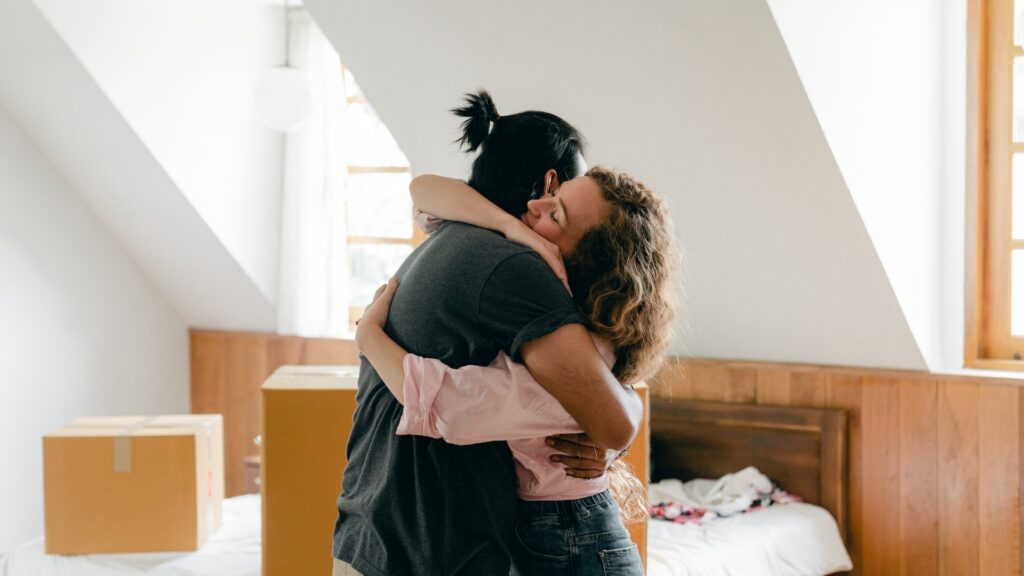
Physical Closeness Can Become Ordinary, and That Is Not a Bad Thing
For a long-distance couple, physical affection can carry enormous emotional weight because every hug, kiss, handhold, and shared morning has an ending attached to it.
After closing the distance, those moments become available every day.
At first, that can feel almost unbelievable.
Then it becomes normal.
You might eventually stop noticing the small physical things you once desperately missed because they are now part of your everyday environment.
Your partner’s hand may reach for yours without either of you thinking about it and falling asleep beside each other may become so familiar that you forget how extraordinary it once felt.
There is something beautiful about that kind of normality.
Love cannot remain permanently dependent on novelty.
The adjustment phase asks you to discover that intimacy can become less dramatic without becoming less meaningful.
You are moving from the excitement of finally having access to each other toward the deeper experience of being known in ordinary circumstances.
That shift may feel less intense than your visits did, but it can create a different kind of closeness.

You May Discover That You Need More Alone Time Than You Expected
Some couples assume that after spending so much time apart, they will want to spend every possible hour together.
Then they move in and discover that constant togetherness is exhausting.
That realization can be confusing, particularly if you have spent years wishing for more time with your partner.
You may even feel guilty asking for an evening alone because you spent so much of the relationship wishing you could simply be in the same house.
But the desire for solitude does not cancel out the desire for closeness.
You have a relationship with yourself that also needs room.
Perhaps you need to exercise alone, visit friends, work in a separate room, take a long walk, or simply sit somewhere without having to interact with anyone.
Your partner may need something entirely different, and learning to respect those differences can become a major part of adjusting to shared life.
This is especially important for couples who spent years treating every available moment together as precious.
The old instinct may be, “We finally have each other, so we should make the most of it.”
The healthier mindset may be, “We finally have enough security that we do not have to be together every minute to feel connected” and that kind of security takes practice.
You May Stop Planning Dates Because You Think You Have Enough Time
When every visit required flights, money, time off work, and a countdown, spending intentional romantic time together happened almost automatically.
After moving in together, there is always tomorrow.
That is exactly why dates can slowly disappear.
You might tell yourselves you will cook something special next weekend, watch a movie another night, or go somewhere together when things calm down.
Then work gets busy, groceries need buying, laundry needs doing, bills need paying, and another week passes with the two of you existing in the same space without really dating each other.
Being together creates access, but relationships still need intention.
And sometimes the most meaningful thing is getting dressed properly and going somewhere neither of you needs to go, cooking something together without rushing or taking a late-night drive.
You can even read 101 virtual date night ideas you’ll actually enjoy for better ideas.

Money Becomes Part of the Adjustment Too
Financial decisions can become more emotionally visible once two people share a household because spending is no longer happening entirely in separate lives.
You may notice what your partner considers necessary, what they save for, what they spend without thinking, and what makes them anxious. They may notice the same things about you.
That visibility can create tension if neither person understands the financial expectations they are bringing into the relationship.
It helps to talk openly before frustration starts attaching itself to ordinary purchases.
Who pays for what? How are household expenses divided? What happens when one person earns more? How much individual spending freedom does each person have? What are you saving toward together?
These conversations are part of how to plan financially before closing the distance, but they do not end once the move happens.
Your financial reality may change after relocation, especially if one person gave up work, moved away from family, or entered a more expensive living arrangement.
Money can become emotionally loaded because sacrifice is often attached to it.
The healthier approach is to treat finances as something the two of you manage together rather than evidence of who loves whom more.

You May Need to Relearn What Quality Time Means
During long distance, quality time often meant giving each other your full attention because the opportunity was limited.
Living together introduces a different kind of closeness.
You may spend three hours in the same room while one person works and the other reads.
At first, that can feel like the relationship has become less meaningful but it may simply mean you are learning how to be comfortable together without constantly performing connection.
And this is a major emotional shift because you no longer have to turn every conversation into something memorable.
The challenge is knowing the difference between comfortable companionship and emotional disconnection.
If you are still checking in, showing affection, and noticing when something feels wrong, ordinary companionship can become a sign of security rather than boredom.
That is part of how to make a long-distance relationship actually work.

You Are Still Becoming a Couple in a New Environment
Perhaps the most important thing to understand about this phase is that moving in together does not mean you have arrived at the finished version of your relationship.
You have changed during the time you were apart.
Your partner has changed too.
Now you are discovering what those changes look like when your lives physically overlap every day.
That process can expose old insecurities, and force conversations you might have avoided when the relationship was organized around visits and calls.
It can also create a kind of intimacy you could not experience from separate homes.
You get to see how your partner treats you when they are tired and how they respond when you are struggling.
The same patience that helped you survive distance can help you survive adjustment and the same honesty that allowed you to talk about difficult things can help you create a home where both people feel safe.
You do not need to feel perfectly settled immediately but you need room to learn.
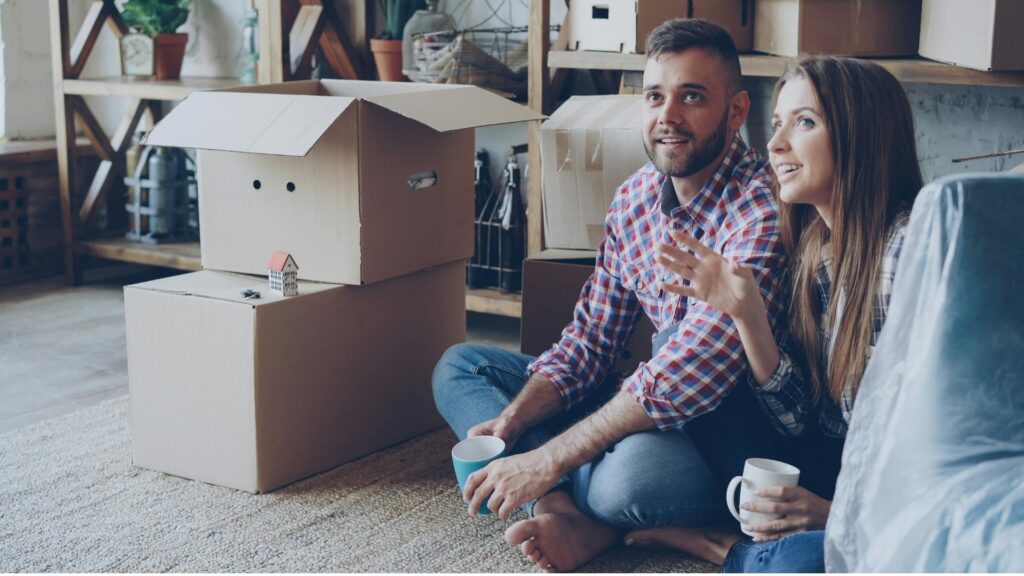
Let the Adjustment Take the Time It Takes
There is no magical morning when you wake up and suddenly understand exactly how to share a home, protect your independencec or communicate during conflict.
For some couples, the adjustment may feel surprisingly smooth while for others, the first few months may bring more irritation, uncertainty, and emotional exhaustion.
Neither experience automatically tells you how successful the relationship will b, because what matters are what you do with what you discover.
If you realize you need more alone time, talk about it and if household responsibilities are creating resentment, address them before they become ammunition.
And if you find yourself missing parts of your old life, do not immediately interpret that feeling as regret.
You are allowed to miss who you were before the move while still loving the life you are building now.
Closing the distance gives you the opportunity to discover a version of your relationship that long distance could never fully show you.
So, give yourselves enough patience to learn that version instead of expecting the first few weeks or months to feel like the final answer.
You can feed your mind with these related articles:
17 Signs Trust Is Slowly Breaking Down
Things That Quietly Destroy Trust in long distance relationships
Healthy Boundaries That Actually Build Trust in distant relationships







One Comment