

How to Have Better Video Calls Without Feeling Awkward
Disclosure: Some of the links in this post are affiliate links. This means if you click on the link and purchase an item, I will receive an affiliate commission at no extra cost to you.
Long-distance couples often assume awkward video calls happen because they’ve run out of things to talk about. That explanation sounds reasonable until you notice something challenging.
You can prepare interesting stories, ask thoughtful questions, genuinely miss each other, and still finish the call feeling strangely disconnected. The conversation wasn’t terrible, nobody argued, and neither person seemed upset.
But then, something about the experience felt heavier than it should have.
Most relationship advice respond by giving couples more activities. You’re told to play games, watch films together, cook dinner over FaceTime, or plan elaborate virtual dates.
Those ideas occasionally help, yet they rarely solve the real problem. If every call still feels draining underneath the entertainment, the issue probably isn’t a lack of creativity. It’s the pressure both of you carry every time the camera turns on.
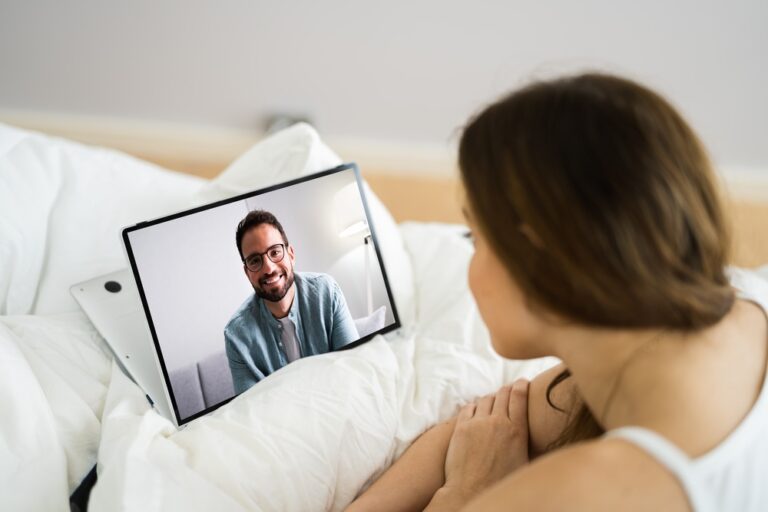
During video calls, you’re trying to understand another person’s emotions through a tiny screen while unconsciously monitoring your own face, adjusting your lighting, interpreting delayed reactions, and wondering if silence means boredom or simply weak internet.
None of that happens when you’re sitting beside someone in the same room.
But with video call, Instead of feeling present with your partner, you slowly begin performing for the camera.
The healthiest video calls are the ones where neither person feels responsible for entertaining the other every minute.
Once you understand that awkwardness is usually a video-call problem rather than a conversation problem, you’ll stop trying to become more interesting and start creating an environment where genuine connection can happen naturally.

Better Video Calls Begin Long Before You Press “Join Meeting”
Many couples spend hours searching for conversation ideas when they would benefit far more from changing the way they think about video calls altogether.
A screen will never recreate sitting beside someone you love.
Expecting it to do so places unnecessary pressure on every conversation before it even begins.
Instead of asking, “How do we make this call exciting?” ask a better question: “How do we make this call feel easier?”
Awkwardness grows whenever both people believe they must keep the conversation alive every second.
Suddenly every pause feels uneasy and every delayed response looks suspicious.
The solutions suggested below aren’t designed to help you become funnier, smarter, or more entertaining.
Their purpose is much simpler.
Each one removes unnecessary pressure so both of you can relax into the conversation instead of constantly managing it.
Ironically, the less effort you spend trying to create the perfect video call, the more natural your time together usually becomes.

Hide Your Own Video So You Stop Performing Instead of Connecting
One of the simplest ways to have better video calls without feeling awkward is to stop watching yourself.
That small square showing your own face seems harmless until you realize how much attention it steals throughout the conversation.
Every smile, every pause, every glance away from the screen becomes something you unconsciously judge.
Instead of focusing completely on your partner, part of your brain keeps asking,
“Do I look tired?” “Am I smiling enough?” “Do I seem interested?”
Those thoughts quietly turn a conversation into a performance.
Imagine having a mirror beside you every time you spoke with someone in person.
You would become just as self-conscious.
Video calls create that same experience without most couples realizing it.
Emotional connection becomes harder because your attention keeps moving back to yourself.
The solution to this is simple.
Most video platforms allow you to hide your self-view while leaving your camera on for your partner.
The moment you remove your own image, listening becomes easier because your brain no longer divides its attention between two people.
Instead of monitoring yourself, give your full attention to the person you actually called.

Let Silence Breathe Instead of Treating Every Pause Like a Problem
Many couples don’t dislike silence.
They dislike what they think silence means.
On a video call, even five quiet seconds can feel very long and intentional.
One person immediately searches for another question while the other begins wondering whether something is wrong.
Before long, both partners start filling every gap with unnecessary conversation simply to avoid the discomfort of saying nothing.
Real life doesn’t work that way.
When you’re sitting beside someone you love, quiet moments happen naturally.
One person pours another cup of coffee. Someone glances out of the window. A thought takes a little longer to form.
None of those moments feel awkward because your physical presence already communicates connection.
Video calls remove that reassurance, causing silence to feel much louder than it actually is.
Instead of racing to eliminate every pause, learn to welcome it. Take a sip of your drink.
Smile. Look outside for a moment. Give your partner permission to think before responding.
Your conversation often becomes richer because neither person feels pressured to speak before they’re ready.
Connection grows when people feel comfortable sharing both words and quiet moments together.

Shorter Calls Often Feel More Intimate Than Longer Ones
Many couples believe longer calls automatically create stronger relationships.
That’s not totally true.
Once a video call stretches beyond the point where both people still feel mentally present, the conversation begins feeling like work instead of quality time.
Your brain is already processing delayed audio, limited body language, changing facial expressions, and the effort of looking engaged through a screen.
After a while, that mental workload becomes exhausting, even when you’re talking to someone you genuinely love.
Ironically, trying to stay online for another hour often leaves both people feeling less connected than ending the call while it still feels enjoyable.
Instead of measuring your relationship by the number of hours you spend together, measure how you both feel after hanging up.
A refreshing twenty-five-minute conversation is far healthier than a draining two-hour marathon that leaves both of you emotionally tired.
Don’t be afraid to finish a call while you’re still laughing, still interested, and still looking forward to the next conversation.
Anticipation keeps relationships warm. Exhaustion slowly takes the excitement away.
Find out more about this point in How Often Should You Talk in a Long-Distance Relationship.

Stop Trying to Recreate Real Life and Learn the Rules of Video Instead
Many couples unknowingly make video calls harder because they expect them to feel exactly like sitting together on the same couch.
That expectation creates disappointment before the conversation even begins.
A screen can never replace physical presence, and forcing it to do so only makes every missing detail feel more obvious.
Rather than treating video as a poor substitute for being together, accept it as a different way of connecting with its own strengths and limitations.
Instead of worrying that the call doesn’t feel “real enough,” focus on what video does well.
You can see each other’s expressions, celebrate small victories, or simply check in after a long day.
Those things still matter, even if you’re thousands of miles apart.
The happiest long-distance couples don’t spend every call comparing it with being together in person.
They appreciate it for what it is instead of criticizing it for what it isn’t.
Once your expectations become more realistic, awkwardness begins disappearing because you’re no longer expecting a screen to solve problems it was never designed to solve.
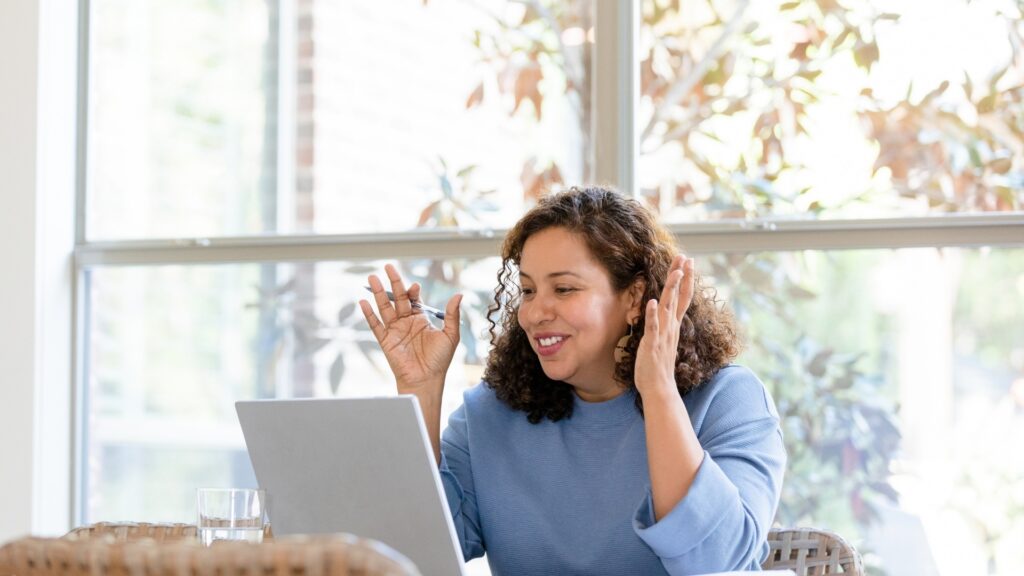
Create Simple Turn-Taking Habits So You Stop Talking Over Each Other
Few things interrupt the flow of a video call faster than both people speaking at the same time.
One of you starts talking, the other jumps in, both apologize, then neither knows who should continue.
After repeating that pattern several times, the conversation starts feeling clumsy instead of relaxed.
The problem isn’t poor communication. It’s the tiny delay that naturally exists in video technology.
Rather than pretending that delay doesn’t exist, work with it instead of against it.
Give your partner an extra second after they finish speaking before responding.
If both of you begin talking together, laugh about it and deliberately invite the other person to continue instead of competing for the conversation.
Those tiny habits remove unnecessary tension and allow the discussion to flow much more naturally.
Healthy communication isn’t only about choosing the right words. It’s also about creating enough space for those words to be heard comfortably.
When both people stop rushing to respond, interruptions become less frequent, patience grows, and the entire call begins feeling calmer.
You can read more on the 25 Conversation Mistakes That Push Couples Apart.
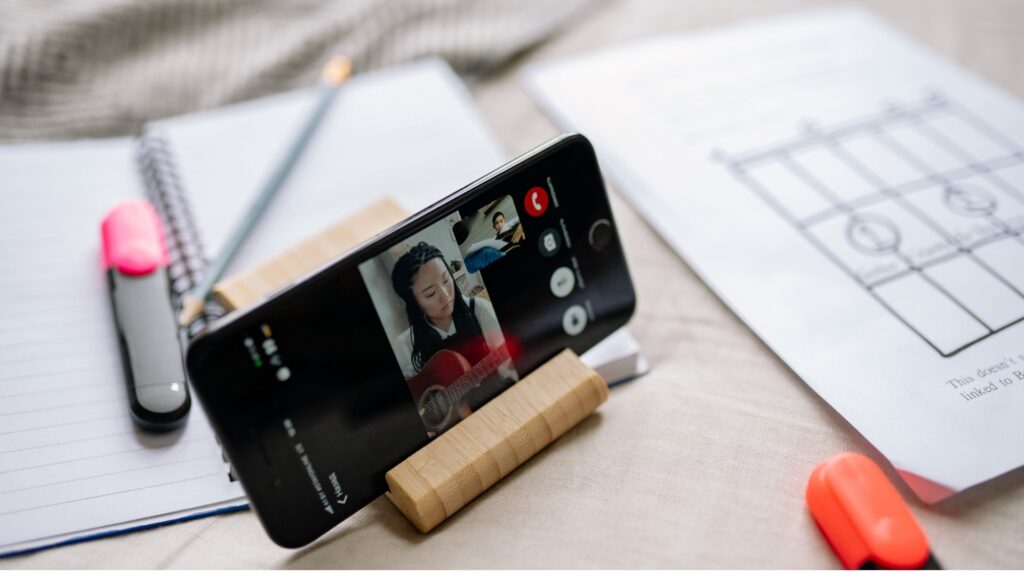
Spend Part of the Call Simply Sharing the Same Space
Not every minute of a video call needs to revolve around conversation.
In fact, one of the most overlooked ways to have better video calls without feeling awkward is allowing yourselves to exist together without constantly speaking.
Many couples assume silence means they’re wasting valuable time. The opposite is often true.
Choose fifteen or twenty minutes to leave your cameras on while each of you quietly does something different and ordinary.
One person might prepare dinner while the other folds laundry, reads a book, waters plants, or finishes a little work.
You don’t need a script, a game, or an endless list of questions. You’re simply sharing life instead of performing it.
This approach recreates something distance usually takes away: ordinary presence.
The goal isn’t entertainment. It’s familiarity.
By the time you begin talking again, the pressure has disappeared because neither of you spent the previous half hour trying to keep the conversation alive.
Sometimes the greatest comfort comes from knowing someone is there, even when neither of you is saying very much.

Give Your Partner Something to Notice Instead of Another Question to Answer
Many video calls become repetitive because both people keep asking for updates instead of giving each other something interesting to observe.
Before long, the conversation turns into a familiar routine.
“How was work?” “What did you eat?” “Anything new?”
None of those questions are wrong, yet they place the responsibility for keeping the conversation alive on the other person.
Try changing the pattern.
Instead of beginning with another question, begin with something visual.
Show the bread you finally baked successfully. Hold up the book you’ve almost finished.
Point the camera towards the sunset outside your window. Introduce the plant you’ve been trying to keep alive.
Share the notebook where you’ve been sketching ideas.
Those moments immediately create shared context because your partner is experiencing something with you instead of simply hearing another report about your day.
Visual conversations feel more natural on video because the camera becomes part of the interaction instead of acting as nothing more than a microphone with a picture attached.
The goal isn’t to impress your partner with exciting experiences.
It’s to invite them into small pieces of your everyday life. Familiarity grows naturally when both people have something real to notice together.
The article, how to never run of things to talk about explores more on this.
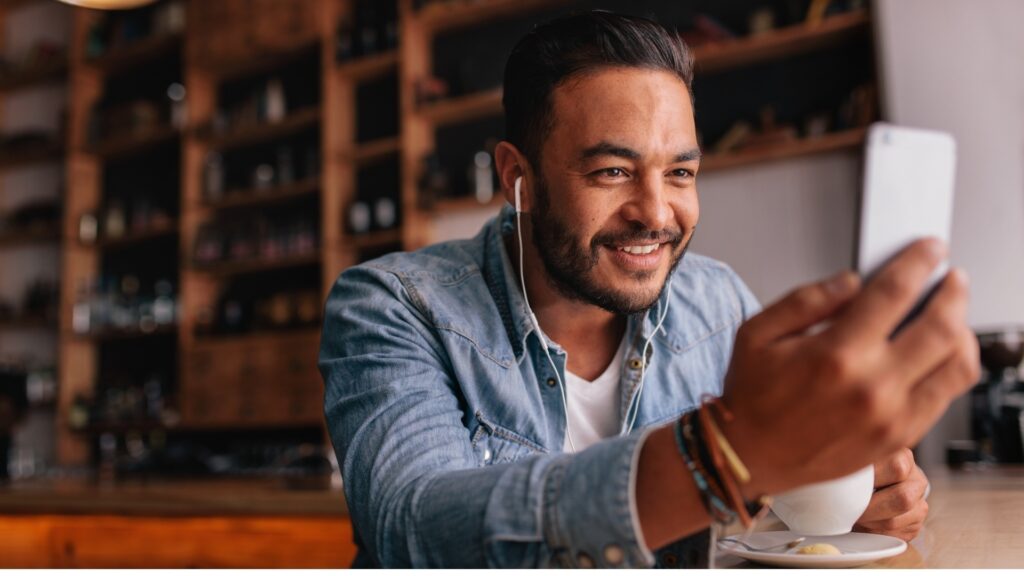
Pay Attention to Their Face Instead of Chasing Perfect Eye Contact
Some relationship advice often tells couples to maintain eye contact during video calls, but very few people explain why that advice feels impossible to follow.
Looking directly into the camera creates the illusion of eye contact for your partner, yet doing so means you can’t actually watch their face.
Looking at their face allows you to notice their smile, expressions, and reactions, but the camera makes it appear as though you’re looking somewhere else.
Trying to solve that impossible choice usually makes people more anxious than connected.
Rather than worrying about perfect eye contact, focus on being emotionally attentive.
Notice changes in their expression. Watch for genuine laughter.
Pay attention when they seem quieter than usual.
Those observations tell you far more about how your partner is feeling than whether your eyes appear perfectly aligned with the camera.
Your partner is paying attention to whether you seem interested, patient, present, and emotionally available.
True connection comes from making the person on the other side feel seen.

End the Call While You Still Want One More Minute Together
Many couples stay online because they feel guilty ending the conversation, even after both people have become mentally tired.
Eventually, someone starts checking the time, scrolling through notifications, or struggling to stay engaged. T
he call ends, but instead of feeling closer, both people feel strangely drained.
Leaving at the right moment creates a completely different experience.
When the conversation is still enjoyable, don’t be afraid to say goodnight.
Ending while you’re both smiling preserves the emotional warmth of the call and gives each of you something to anticipate instead of recover from.
That anticipation matters because it keeps the next conversation feeling exciting rather than obligatory.
Think about your favourite television series.
Episodes don’t continue until viewers become exhausted.
They finish while people still want another one. Healthy video calls work much the same way.
Don’t measure success by how long you stayed connected.
Measure it by whether both of you closed the call feeling lighter, happier, and genuinely excited about seeing each other again.

Build a Video Call Routine That Feels Like Coming Home
The couples who enjoy video calls the most aren’t usually the ones with the fastest internet, the longest conversations, or the most exciting virtual dates.
They’re the ones who remove unnecessary pressure until calling each other feels as ordinary as walking through the front door after a long day.
That sense of familiarity doesn’t happen by accident. It grows from small routines that tell your brain, “This is a safe place to relax.”
Perhaps you always make a cup of tea before the call begins.
Maybe both of you settle into the same comfortable chair or spend the first few minutes quietly smiling before either person starts talking.
Those little rituals become emotional anchors because they replace performance with comfort.
Instead of wondering how you’re going to keep the next hour entertaining, you simply look forward to spending time together.
Relationships become stronger when being together feels restful instead of demanding.
Your partner shouldn’t feel like an audience you’re trying to impress. They should feel like home.
Conclusion
If there’s one lesson, I hope you take away from this article, it’s this: awkward video calls are rarely a sign that your relationship is failing apart.
More often, they’re a sign that you’re expecting technology to create something it was never designed to provide on its own.
A screen cannot replace sitting beside the person you love.
It can’t reproduce every expression, every tiny movement, or every comforting silence that happens naturally when you’re together in person.
Trying to force it to do so only creates pressure, and pressure is the fastest way to make any conversation feel unnatural.
Accept the occasional silence instead of rushing to fill it.
Keep conversations short enough that both of you finish with energy left to give.
Learn the rhythm of video instead of fighting against it.
Most importantly, remember that your partner isn’t expecting a performance. They’re hoping to spend time with the person they love.
Ironically, the less you try to impress each other, the more connected you’ll probably feel.
Technology works best when it quietly supports the relationship instead of becoming the centre of it.
Once both of you stop treating every call like a date that has to be memorable, ordinary moments begin feeling meaningful again.
Sometimes the greatest gift you can offer your partner isn’t another clever conversation starter or elaborate virtual activity.
It’s the freedom to relax, breathe, and simply enjoy being together without worrying whether every minute is interesting enough.
Keep exploring with these helpful reads:
Things Couples Should Talk About Before Closing the Distance
How to Avoid Misunderstandings Over Text in long distance relationships
17 Signs Trust Is Slowly Breaking Down
The Real Reason You’re Constantly Overthinking
Why You Keep Checking Their Last Seen in long distance relationships






6 Comments