

Mistakes Couples Make After Finally Moving Together
Disclosure: Some of the links in this post are affiliate links. This means if you click on the link and purchase an item, I will receive an affiliate commission at no extra cost to you.
You can love someone deeply and still discover that living with them is a completely different experience from loving them from a distance.
They might leave things exactly where they used them, while you cannot relax when the house feels untidy. You may want to spend Saturday together because you have missed them for so long, while they suddenly need a few hours alone.
Even something as simple as deciding what to eat can become surprisingly complicated when two people have different routines, preferences, budgets, and energy levels.
And none of these things were necessarily visible before you shared a home because long distance gives couples a certain amount of structure.
You have planned calls, visits, messages, and separate homes and you get to choose when you connect, and you often meet each other during the parts of life you are most excited to share.
Now your partner sees the tired version of you and how you behave when work goes badly, when you are stressed about money, when you are irritated, when you need space, and when you simply do not feel like being romantic.
You also see those things in them.
And that can be wonderful because intimacy becomes much more real and it can also expose differences you never had enough time or proximity to notice.
But the mistakes that happen after moving together are often not dramatic but they are small assumptions that slowly create resentment.
Expecting constant togetherness, treating the home as someone’s responsibility, forgetting to date each other, taking personal space personally, or assuming that physical closeness means communication no longer needs effort.
The goal is not to avoid every difficult moment but to recognize the habits that can turn a beautiful reunion into an exhausting adjustment and learn how to handle them before they become part of the relationship.
You can also read, the silent relationship killer nobody warns you about.

The Parts of Living Together That Distance Could Not Prepare You For
There is a difference between knowing someone well and knowing how someone lives.
You may know your partner’s fears, dreams, childhood stories, favourite songs, work frustrations, and the things that make them laugh. You may have spent countless hours talking about your future together.
None of that tells you exactly how they behave when they are hungry, exhausted, overwhelmed, or annoyed.
Living together introduces a kind of closeness that conversations cannot fully prepare you for.
You begin noticing patterns rather than isolated moments. You see how they spend money, manage time, respond to stress, organise their belongings, communicate when upset, and recover after a difficult day.
That can deepen intimacy, but it can also challenge the version of each other you created during distance.
This is why you should know about things couples should talk about before closing the distance.
Those conversations can prepare you for practical realities, but sharing a home will still reveal things you could not have predicted.
The important part is not expecting your partner to behave exactly as you imagined.
It is learning how to respond when reality looks different from the picture you carried in your head.
You may also be Interested in how to navigate cultural differences together.

1. Assuming Living Together Means You Should Do Everything Together
After spending so much time apart, separate time can feel almost wasteful.
You finally live in the same home, so why would you go for a walk alone or why would you spend an evening with friends instead of your partner?
At first, doing everything together may feel like making up for lost time.
The problem starts when togetherness becomes an expectation rather than a choice.
Your partner may want to read while you watch television, you may want to spend Sunday morning alone while they want to go out and they may enjoy meeting friends without you.
None of these things automatically mean the relationship is becoming distant.
People still need an individual life after moving in together.
In fact, having separate interests can make shared time feel more meaningful because you are bringing something back into the relationship.
You have experiences to tell each other about instead of spending every waking hour in the same emotional space.
You can also read healthy boundaries for long-distance couples because, even though you are no longer long-distance because, boundaries do not become unnecessary when you share an address.
If anything, they become more practical so talk about alone time before someone starts feeling ignored and make space for friendships.
Also keep hobbies that belong to you and let your partner have parts of their day that do not involve you.

2. Expecting the Relationship to Feel Romantic All the Time
There is a particular kind of disappointment that can happen after moving together.
You imagined waking up beside your partner and feeling grateful every morning. Instead, you wake up late, rush through breakfast, argue about who forgot to buy groceries, and spend eight hours working.
By evening, neither of you has much energy.
This can feel strangely anticlimactic.
The problem is that many couples confuse romantic intensity with relationship quality.
Long distance naturally creates moments that feel special. A visit has an arrival, a goodbye has emotional weight, and a weekend together feels precious because there is a clock running in the background.
Living together removes that scarcity.
A shared life contains boring evenings, errands, laundry, tired conversations, and meals eaten while checking your phone.
It also contains inside jokes, sleepy mornings, spontaneous hugs, familiar routines, and the comfort of knowing someone is nearby.
You still need romance, but you do not need to manufacture a honeymoon atmosphere every day.
Instead, pay attention to whether you are still intentionally choosing each other.
Plan a date, make their favourite meal, put your phone away, kiss them before leaving for work and sit together without needing a reason.
You can borrow ideas from 101 virtual date night ideas you’ll actually enjoy and turn some of them into real-life dates.
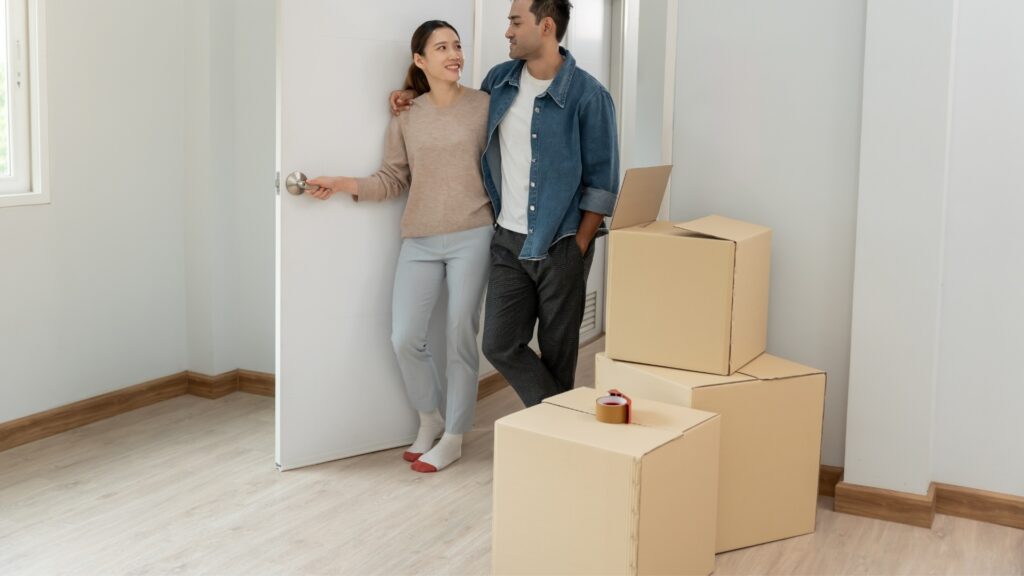
3. Treating Household Chores Like They Will Sort Themselves Out
Nothing reveals different expectations quite like a shared kitchen.
One person sees three dishes and thinks, “I’ll wash those later.”
The other sees three dishes and thinks, “Why are these still here?”
Neither person has to be deliberately difficult for resentment to develop.
They may simply have grown up with different ideas about cleanliness, responsibility, and timing.
The same thing happens with laundry, cooking, grocery shopping, taking out rubbish, cleaning bathrooms, changing bedsheets, and remembering household supplies.
During long distance, none of these differences affected the relationship because you were maintaining separate homes.
Now they affect both people every day.
That is why couples need to discuss the practical side of living together rather than assuming love will make the arrangement naturally fair.
You do not necessarily need a rigid chore chart. You do need clarity.
Who normally cooks? Who shops? What happens when both people have had exhausting days? How clean does the home need to be before either person feels comfortable? Which jobs does each person dislike?
Most importantly, do not let one person become the household manager.
If someone has to notice every task, remember every appointment, track every grocery item, and remind the other person what needs doing, the workload is not actually shared.
The aim is not to count every plate but to make sure both people feel responsible for the life they are creating.
The article on the adjustment phase nobody talks about will be a good read at this point.

4. Thinking Your Partner Should Know What You Need Without Being Told
Physical closeness can create a strange communication problem.
You assume your partner can tell when something is wrong because they are sitting right there but they may not.
Being physically present does not make someone better at reading your mind.
In some ways, long distance forced couples to communicate more deliberately. You had to explain your feelings because your partner could not simply observe your body language or notice a change in your routine.
After moving together, couples sometimes become less intentional because they believe proximity has replaced explanation.
It has not.
Your partner may see that you are quiet without understanding why. They may notice that you are frustrated without knowing what caused it. They may sense that you want affection but not understand what kind.
Say what you need.
That does not mean turning every feeling into a formal relationship discussion. Sometimes a simple sentence is enough.
“I’ve had a terrible day. Can you sit with me?”
“I need some time alone tonight.”
“I felt hurt when that happened.”
“Can we talk about this after dinner?”
Learning to express needs directly also protects you from the cycle of expecting something, feeling disappointed when it does not happen, and then blaming your partner for failing a test they never knew they were taking.
This is the same principle in how to avoid misunderstandings over text in long distance relationships.

5. Keeping Score of Who Sacrificed More to Make the Move Happen
Moving together often involves sacrifice.
Someone may have left a job, moved away from family, changed cities, abandoned familiar routines, or entered an unfamiliar environment.
The danger begins when that sacrifice becomes a permanent bargaining chip.
“I moved here for you.”
“I left everything behind.”
“You wouldn’t have had to change anything if I had not moved.”
Those statements may contain real pain, but repeated often enough, they can turn the relationship into a debt system.
The person who moved may feel they are owed more.
The person who stayed may feel they have to compensate forever.
Neither dynamic creates the kind of home most couples imagined.
If your partner made the bigger relocation sacrifice, acknowledge it. Ask what the transition has actually cost them, help them build friendships and routines and take their homesickness seriously.
At the same time, sacrifice should not become a weapon that ends every disagreement.
This is one reason the costs of moving for love should be well evaluated before and after the move.
Relocation affects identity, career, friendships, family connections, independence, and emotional stability.
The move was a shared relationship decision and the adjustment still belongs to both people.
So, if one person is struggling, the answer is not to keep reminding them that they chose to move but to ask what would help them feel at home.

6. Taking Personal Space as a Sign That Something Is Wrong
This can be especially difficult for couples who spent years wishing for physical closeness.
Imagine finally having your partner beside you, only to hear, “I want some time alone.”
It can sting.
Your first thought may be, “But why? We barely get to spend enough time together.”
That reaction makes sense emotionally, but it can create a problem if your partner starts feeling guilty for needing space.
People recharge differently.
Some need conversation after a difficult day. Others need silence. Some process conflict by talking immediately. Others need time before they can explain what they are feeling.
You may even discover that your partner’s need for solitude is much stronger than you expected.
Do not automatically turn that difference into a relationship problem.
Ask what the space means.
If they need an hour to decompress after work, that does not necessarily mean they are withdrawing from you. If they want to spend an evening with friends, that does not mean they value those friends more than you.
Personal space becomes unhealthy when it is used to punish, avoid, or control.
It becomes healthy when it allows two people to remain whole inside the relationship.
This is also where you need to pause and read, how to trust someone without constant reassurance becomes useful.
Trust means allowing your partner to exist outside your immediate attention without turning their independence into evidence against them.
The person you loved before moving in was an individual and they still are.

7. Letting Date Nights Disappear Because You Are Already Together
There is something almost funny about how quickly this happens.
Before moving together, you might spend hours planning a date. You choose what to watch, what to eat, what game to play, or what conversation you want to have.
After moving together, you can become so comfortable that you stop planning anything.
Then both of you end up scrolling through your phones.
The relationship has not necessarily become boring but your shared life simply needs intentional moments that are different from the routine.
A date does not have to involve leaving the house because the point is to interrupt autopilot.
Long-distance couples often become very creative because they have to work around physical separation. That creativity should not disappear just because the distance is gone.
You can even read the date night mistakes that make calls feel like interviews and notice which habits made your old dates feel forced, then create new rituals that feel natural in person.

8. Trying to Solve Every Difference Immediately
Living together means you will discover differences faster than you did before.
Your partner may never become as tidy as you are and you may never become someone who enjoys spontaneous plans.
Compatibility does not require identical personalities.
It requires enough understanding and flexibility to build routines that respect both people.
Start by identifying the differences that genuinely affect the relationship.
If something creates repeated resentment, discuss it and if something is simply different, ask yourself whether it actually needs changing.
This distinction can save couples from turning a shared home into a constant improvement project where each person feels watched, corrected, and evaluated.

9. Using Conflict From the Long-Distance Years as Evidence Against the Relationship
Old arguments can become surprisingly powerful after moving together.
A disagreement about something small may suddenly bring up everything that happened during the years apart.
“You always did this when we were long-distance.”
“You never understood me then either.”
“This is exactly why I was worried about moving.”
The current disagreement becomes connected to every unresolved fear from the past.
That makes repair much harder.
Long-distance relationships can contain their own emotional history: missed calls, misunderstood messages, jealousy, cancelled visits, difficult goodbyes, loneliness, and moments when one person felt more invested than the other.
Some of those experiences may still matter.
But bringing every old wound into every new disagreement prevents the relationship from having a present.
If there is something from the past that genuinely remains unresolved, give it a proper conversation rather than using it as ammunition during unrelated arguments.
And be careful with the words you use when angry.
Things you should never text during an argument apply just as strongly to conversations held face-to-face.
Do not threaten the relationship simply because you are frustrated and do not use the move itself as a weapon.
Conflict is part of learning to live together, and the goal is to become better at repairing them.

10. Forgetting That You Still Need to Build a Life Outside the Relationship
Moving in together can accidentally shrink both people’s worlds.
Your partner becomes your main companion, your main social contact, your person for weekends, your person for errands, your person for entertainment, and sometimes your only emotional outlet.
That may feel comforting at first.
Over time, it can place too much weight on the relationship.
Your partner cannot reasonably become your entire social life.
You still need friendships, interests that belong to you, professional ambitions, personal goals, family connections, and moments where you are simply yourself.
The same applies to your partner.
This is particularly important if one person moved to an unfamiliar place. They may need more support building a community than you initially realise.
Encourage each other to have lives beyond the home.
Meet each other’s friends, but do not require every friendship to become a joint friendship. Support hobbies that do not involve you. Celebrate your partner’s individual achievements.
A healthy shared life is not two people becoming inseparable.
It is two people becoming connected while still remaining recognisable to themselves.
That is part of how to make a long-distance relationship actually work, too. The relationship should add to your life without becoming the only place where your life exists.

Give the Relationship Room to Become Something New
The first months after moving together can be confusing because you are learning two things at once.
You are learning your partner in a new environment, and you are learning yourself inside a relationship that suddenly has much more access to your everyday life.
That process can expose habits you did not know were there.
It can also reveal strengths you could not see from a distance.
Maybe your partner is more patient than you realized or you discover that you work beautifully as a team.
Let the information be information.
You do not have to turn every difficult discovery into a verdict about the relationship and you are allowed to adjust, change routines and admit that something you expected to enjoy does not work for you.
Most importantly, remember that moving in together does not mean you have finally figured each other out.
It means you now have the opportunity to keep learning each other in a much more honest setting.
If you’re looking for more guidance for your relationship, these related articles offer more ideas to explore:
The Best Personalized Gifts for Long-Distance Couples